

Introduction
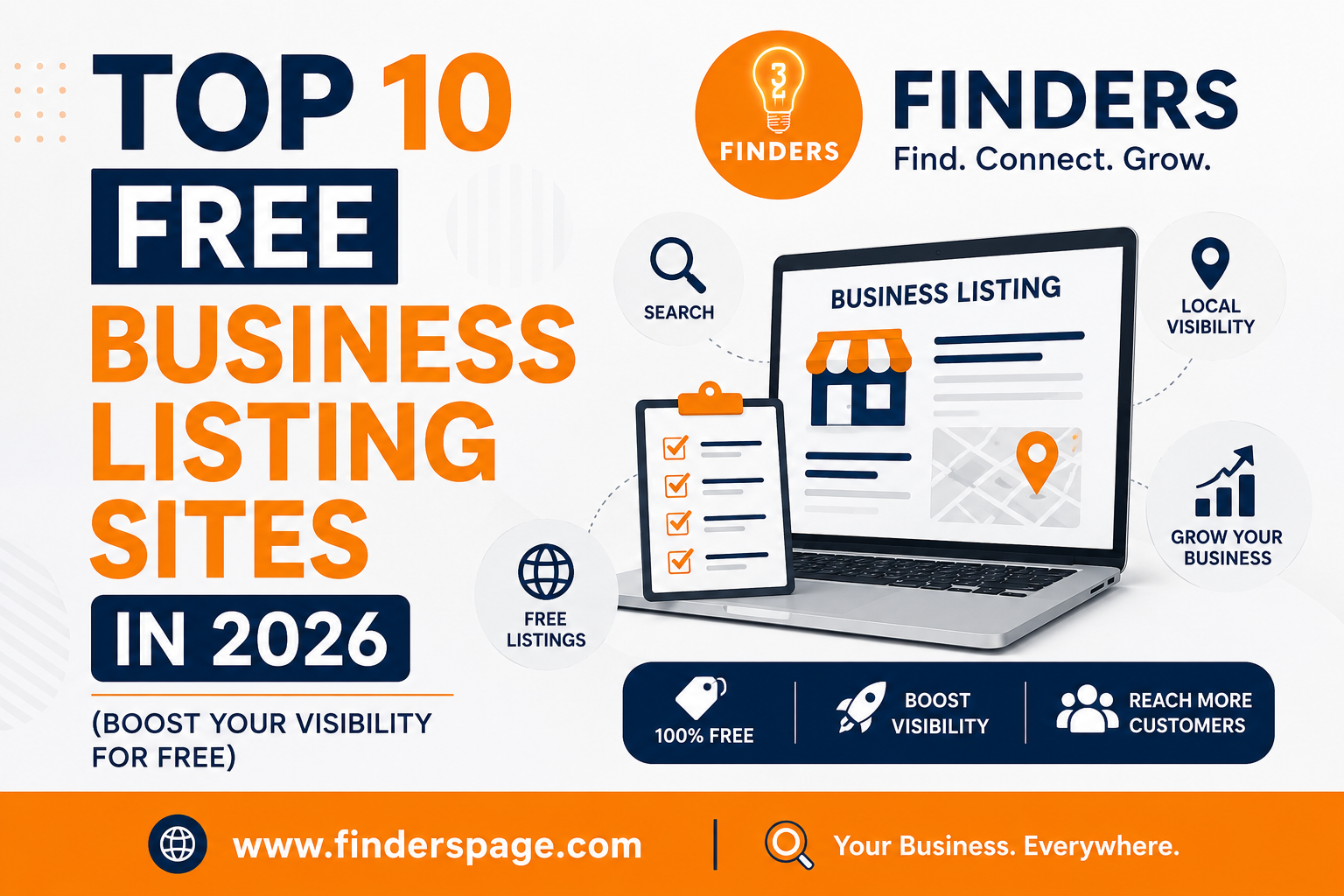
Running a small business in 2026 means competing in a crowded digital space — but it does not have to cost a fortune. One of the most powerful and underutilized strategies is listing your business on free online platforms. Done correctly, free business listings can dramatically increase your visibility, drive qualified website traffic, and generate real customer inquiries — all without spending a single dollar on ads.
Search engines like Google use citations — consistent mentions of your business name, address, and phone number (NAP) across the web — as a local ranking signal. Every quality listing you create sends trust signals to Google that your business is legitimate, active, and worth showing to searchers.
In this guide, we break down the 10 best free business listing sites available in 2026, explain what makes each one valuable, and show you exactly how to optimize your listings for maximum results.
Why Free Business Listings Matter for SEO in 2026
Before we dive into the list, it is worth understanding why this strategy is so effective — especially right now.
Local SEO has become more competitive than ever, with Google prioritizing verified, consistent business information across the web. Businesses with listings on multiple high-authority platforms consistently outrank those that rely solely on their own website.
Beyond SEO, free listings put your business in front of people who are actively searching for products or services like yours. A well-optimized listing on a high-traffic platform can generate dozens of inquiries per month — completely free. That is an ROI that no paid ad campaign can reliably match in the early stages of a business.
The 10 Best Free Business Listing Sites in 2026
1. FindersPage — Best All-in-One Free Platform for Entrepreneurs
FindersPage is one of the most versatile and innovative free platforms available in 2026. Unlike traditional static directories, FindersPage is a living community that combines authentic social networking, business listings, a job board, real estate listings, and an online shop — all in one place.
What makes FindersPage genuinely unique is its income-earning model: every registered user, regardless of follower count, can earn money directly through the platform. For small businesses, entrepreneurs, and creatives, this creates far more value than a static listing. You are not just placing a pin on a map — you are joining an engaged community that actively promotes your brand.
Additionally, FindersPage enforces a strict no-fake-AI-posts policy, meaning your business is seen by real humans who are genuinely interested in connecting and doing business.
How to Optimize Your FindersPage Listing: Complete every profile field. Add high-quality images of your business. Post regular updates to stay visible in the community feed. Link to your website and social media accounts. Engage with other users in your niche category.
2. Google Business Profile — Non-Negotiable for Local SEO
Your Google Business Profile (formerly Google My Business) is the single most important free listing you can create. It appears in Google Maps, the Google Local Pack, and local search results — putting your business front and center when nearby customers search for what you offer.
Optimized profiles can generate hundreds of phone calls and website visits per month without any paid advertising. In 2026, businesses with complete, regularly updated Google profiles consistently outrank bare-bones competitors.
How to Optimize: Add 10+ high-quality photos. Collect and respond to every review. Use Google Posts weekly with updates and offers. Fill out every service category, product, and business hour field. Add a detailed business description with your primary keyword.
3. Bing Places for Business — The Overlooked Opportunity
While Google dominates search, Bing holds approximately 8% of global search market share and serves tens of millions of users daily. Many of these users are in higher-income demographics and are often decision-makers at businesses. Listing your business on Bing Places is fast, free, and reaches an audience that most of your competitors completely ignore.
4. Yelp — Essential for Service and Hospitality Businesses
Yelp remains one of the most trusted review platforms in 2026, particularly for restaurants, salons, contractors, plumbers, and local service businesses. A strong Yelp presence with consistently positive reviews can drive substantial referral traffic and generate real bookings and conversions.
Pro tip: Respond professionally to every review — positive and negative. This signals to both Yelp's algorithm and potential customers that your business is attentive and trustworthy.
5. Facebook Business Page
Despite algorithm changes and declining organic reach for brands, a Facebook Business Page still provides significant value in 2026. Facebook pages rank in Google for branded searches, meaning anyone who searches your business name will likely find your Facebook page in the top results — even before your own website.
A complete Facebook Business Page also provides social proof, allows customers to message you directly, and enables reviews that appear in search results.
6. LinkedIn Company Page — Essential for B2B
For B2B businesses, professional services, consultants, and recruiting firms, a LinkedIn Company Page is mandatory. LinkedIn pages rank extremely well in Google searches, often appearing in the top 3 results for brand searches. They also provide a high-authority backlink to your website from one of the world's most trusted platforms (DA 99).
7. Trustpilot
Trustpilot has become one of the most influential review platforms globally. For e-commerce businesses, SaaS companies, and service providers, a Trustpilot listing with genuine customer reviews builds powerful social proof. Trustpilot also provides a dofollow backlink from a DA 94 domain — one of the strongest free backlinks available.
8. Hotfrog — Free Directory with Strong SEO Value
Hotfrog is a free business directory available in over 30 countries. It provides a dofollow backlink, is well-indexed by search engines, and serves as a valuable citation source for local businesses. While Hotfrog drives less direct traffic than the platforms above, its SEO value as a citation source is significant.
9. Foursquare
Foursquare remains a surprisingly valuable location-based business directory. Its data powers many other apps, maps, and navigation services — meaning a Foursquare listing can improve your business's visibility across dozens of platforms simultaneously. For businesses with a physical location, this multiplier effect makes Foursquare particularly worth the few minutes it takes to set up.
10. Manta — Small Business Directory
Manta is a dedicated small business directory that provides dofollow backlinks and ranks well in Google for local business searches. It is particularly effective for service-based businesses targeting local customers, and its niche focus means your listing is seen by an audience that is actively looking for small businesses — not Fortune 500 companies.
How to Maximize Results from Your Free Listings
- Consistency is critical: Use the exact same business name, address, and phone number (NAP) across every platform. Inconsistencies confuse search engines and hurt local rankings.
- Use high-quality images: Listings with professional photos receive significantly more views, clicks, and customer actions than text-only listings.
- Write keyword-rich descriptions: Include your city, service type, and unique value proposition. Mention what makes your business different from competitors.
- Collect genuine reviews: Ask satisfied customers to leave honest reviews on Google, Yelp, and Trustpilot. A steady stream of new reviews signals to algorithms that your business is active.
- Post regular updates: Platforms like FindersPage and Google Business Profile reward active, engaged businesses with greater visibility in their algorithms.
- Monitor and respond: Check your listings monthly. Respond to reviews. Update hours and services as they change.
Frequently Asked Questions
Are free business listing sites worth it in 2026?
Absolutely. Free listings provide dofollow backlinks, brand visibility, and referral traffic. Even a single quality listing on a high-authority platform can drive meaningful organic traffic over time. The time investment — typically 15-30 minutes per platform — has one of the highest ROI ratios of any marketing activity available to small businesses.
How long does it take for listings to improve SEO?
Most listing sites are crawled and indexed by Google within 2-4 weeks of creation. However, the cumulative SEO improvement from consistent citations across multiple platforms typically becomes measurable in 3-6 months. Patience is key — this is a long-term strategy, not an overnight fix.
Do free listings provide dofollow backlinks?
Many do, including platforms like FindersPage, Crunchbase, Manta, and Hotfrog. Some high-DA platforms like Yelp use nofollow links, but these still provide brand signals and referral traffic that benefit your overall SEO profile. A mix of dofollow and nofollow links appears more natural to search engines.
How many listings should I create?
Start with the 10 platforms listed in this guide. Once those are complete and verified, expand to industry-specific directories and local chambers of commerce. Quality and consistency matter more than quantity — 20 perfectly optimized listings outperform 200 incomplete ones.
Conclusion
Free business listings are one of the highest-ROI marketing activities available to small businesses in 2026. By systematically creating and optimizing profiles on the platforms above — starting with FindersPage — you can significantly improve your online visibility, build domain authority, and attract customers who are actively searching for what you offer.
The key is consistency and completeness. Do not create a listing and forget it. Treat each platform as a live marketing asset that rewards regular attention and engagement.
Ready to get started? Create your free FindersPage business listing today at FindersPage.com
Comments (0)